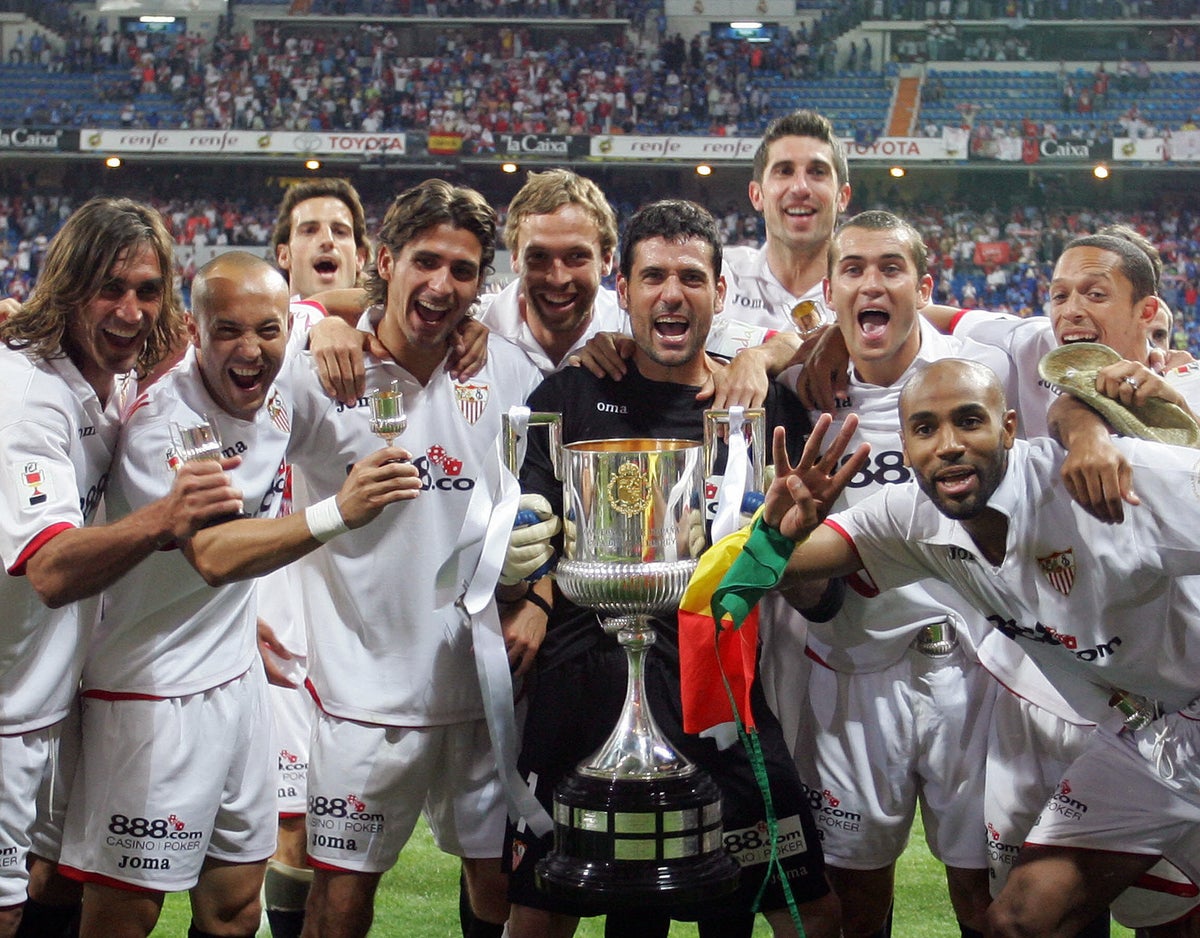
Unveiling Sevilla's Unmatched Legacy in the Europa League
The UEFA Europa League, often simply known as the Europa League (UEL), stands as a crucible of European football, where clubs battle for glory, continental prestige, and a coveted pathway to the elite UEFA Champions League. As the second-tier competition in UEFA's club football hierarchy, nestled below the Champions League and above the UEFA Conference League, the UEL has forged countless heroes and unforgettable moments since its inception. But amidst the fierce competition, one club has carved out a legacy so dominant that it has become synonymous with the tournament: Sevilla FC.
Their unparalleled record of seven titles cements Sevilla's status as the undisputed kings of the Europa League. This article delves into the competition's rich history, its evolution, the allure it holds for clubs across the continent, and, of course, the remarkable story of Sevilla's relentless pursuit of European glory.
From UEFA Cup to Europa League: A Storied Evolution
The journey of the Europa League began in 1971, then known as the UEFA Cup, replacing the Inter-Cities Fairs Cup. It quickly established itself as a vibrant platform for clubs aspiring to continental success, offering a different flavour of European football compared to the then-European Cup (now Champions League). The early format primarily involved a straightforward knockout competition, but as football evolved, so too did the UEL.
Significant changes began to shape the tournament in the 2004–05 season with the introduction of a group stage preceding the knockout rounds, adding more fixtures and tactical depth. The biggest transformation, however, arrived in 2009. This re-branding saw the competition officially adopt its current name, the UEFA Europa League, and merged with the UEFA Intertoto Cup. This crucial overhaul led to an enlarged format, featuring an expanded group stage and revised qualifying criteria, effectively broadening its reach and appeal. For a deeper dive into these transformative periods, explore our article on Europa League Evolution: From UEFA Cup to New 2024-25 Format.
The evolution continues, with the 2024–25 season introducing an even more radical shift: the traditional group stage is being replaced by an expansive league phase involving 36 teams. This ongoing adaptation underscores UEFA's commitment to keeping the tournament fresh, competitive, and highly engaging for clubs and fans alike.
The Allure of Europa League Glory
Winning the Europa League offers much more than just a prestigious trophy. For many clubs, it represents a pivotal moment in their history and a gateway to greater aspirations. Since the 2014–15 season, the UEL winner automatically qualifies for the following season's UEFA Champions League league phase, transforming the competition into a direct and highly desirable route to Europe's premier club tournament. This incentive has undoubtedly heightened the stakes and attracted even stronger contenders.
Furthermore, the UEL champion earns a spot in the UEFA Super Cup, facing the winners of the Champions League in a single-match showdown for continental supremacy. Since 2023, there's an additional opportunity: the UEFA–CONMEBOL Club Challenge, a friendly cup match against the winners of the CONMEBOL Copa Sudamericana, adding an intercontinental flavour to the victor's spoils. These rewards have cemented the Europa League's position as a truly significant and influential tournament in the global football calendar.
Sevilla FC: The Unrivaled Kings of the Europa League
When one speaks of Europa League success, Sevilla FC immediately comes to mind. With an astounding *seven titles* to their name, the Spanish club from Andalusia holds an undisputed record, making them the most successful club in the competition's history. Their dominance isn't just about the number of trophies; it's about the recurring ability to navigate the complex knockout stages, often against formidable opponents, and consistently emerge victorious.
Sevilla's triumphs span different eras, showcasing an enduring quality and a unique knack for the competition. They are one of only two clubs, alongside Tottenham Hotspur, to have won the competition in three different decades. This sustained success points to a deeply ingrained culture of European ambition and a particular affinity for the UEL.
Their methodology often involves a blend of astute player recruitment, tactical flexibility, and an unwavering belief in their ability to perform on the European stage. Key figures, such as manager Unai Emery, who famously led Sevilla to three consecutive titles (2014, 2015, 2016), have played instrumental roles in crafting this legacy. Emery's tactical prowess and motivational skills appeared perfectly suited to the demands of the UEL, turning Sevilla into a seemingly unstoppable force.
European Giants and National Dominance
While Sevilla stands alone at the pinnacle, the Europa League has been a battleground for many European powerhouses. Spanish clubs collectively boast the highest number of victories, with 14 wins in total, underscoring a tactical and technical superiority that often shines in this competition. Following them are England and Italy, both with 10 wins each, showcasing the diverse spread of talent across the continent.
In total, 30 different clubs have lifted the coveted trophy, with 14 of them achieving the feat more than once. This highlights the competition's competitive nature and the challenge of repeat success. The 2020–21 season, for instance, saw Villarreal CF, another Spanish side, defeat Manchester United in a thrilling final that concluded with an epic 11–10 penalty shootout – the longest in UEFA club competition history. This victory not only marked Villarreal's maiden major European title but also secured manager Unai Emery a record fourth Europa League win, reinforcing the deep Spanish connection to this tournament.
Looking ahead, Tottenham Hotspur are referenced as the current holders, having defeated Manchester United 1-0 in the 2025 final. Their victory highlights the continued aspiration of Premier League clubs in the competition and adds another significant chapter to its history. For more insight into their recent triumph, you can read about Tottenham Hotspur: Unveiling the Reigning Europa League Champions.
Practical Insights: What Makes a Europa League Contender?
Beyond the statistics, there are key elements that often define a successful Europa League campaign:
- Squad Depth: With taxing league schedules and domestic cups, a deep squad capable of rotating players without significantly dropping quality is crucial. Teams like Sevilla have historically managed their resources effectively.
- Tactical Versatility: The knockout format demands adaptability. Being able to switch formations, absorb pressure away from home, and exploit weaknesses is vital. Spanish teams, in particular, often excel in tactical discipline.
- Big-Game Mentality: The pressure of European nights, especially in two-legged ties, requires players with strong mental fortitude who can perform under intense scrutiny.
- Managerial Expertise: Managers with a proven track record in European knockout football, such as Unai Emery, often provide a significant edge. Their experience in preparing for opponents and managing game situations can be invaluable.
- Home Advantage: Leveraging passionate home support to secure decisive leads or claw back deficits is a classic European strategy.
The Enduring Appeal and Future of the Europa League
The Europa League has transformed from its humble beginnings as the UEFA Cup into a major European competition, offering not only a prestigious trophy but also direct access to the Champions League elite. Sevilla's unparalleled seven titles serve as a testament to their unique connection with this tournament, a dominance built on astute management, strategic recruitment, and an unwavering winning mentality. As the competition continues to evolve with new formats and increasing stakes, it promises even more thrilling encounters and the emergence of new contenders, all vying to leave their mark on European football history. The race for continental glory continues, and the Europa League remains a captivating spectacle for fans worldwide.